


7 Mistakes You’re Making with Your Yard’s Drainage (and How to Fix Them Before the Next Storm)
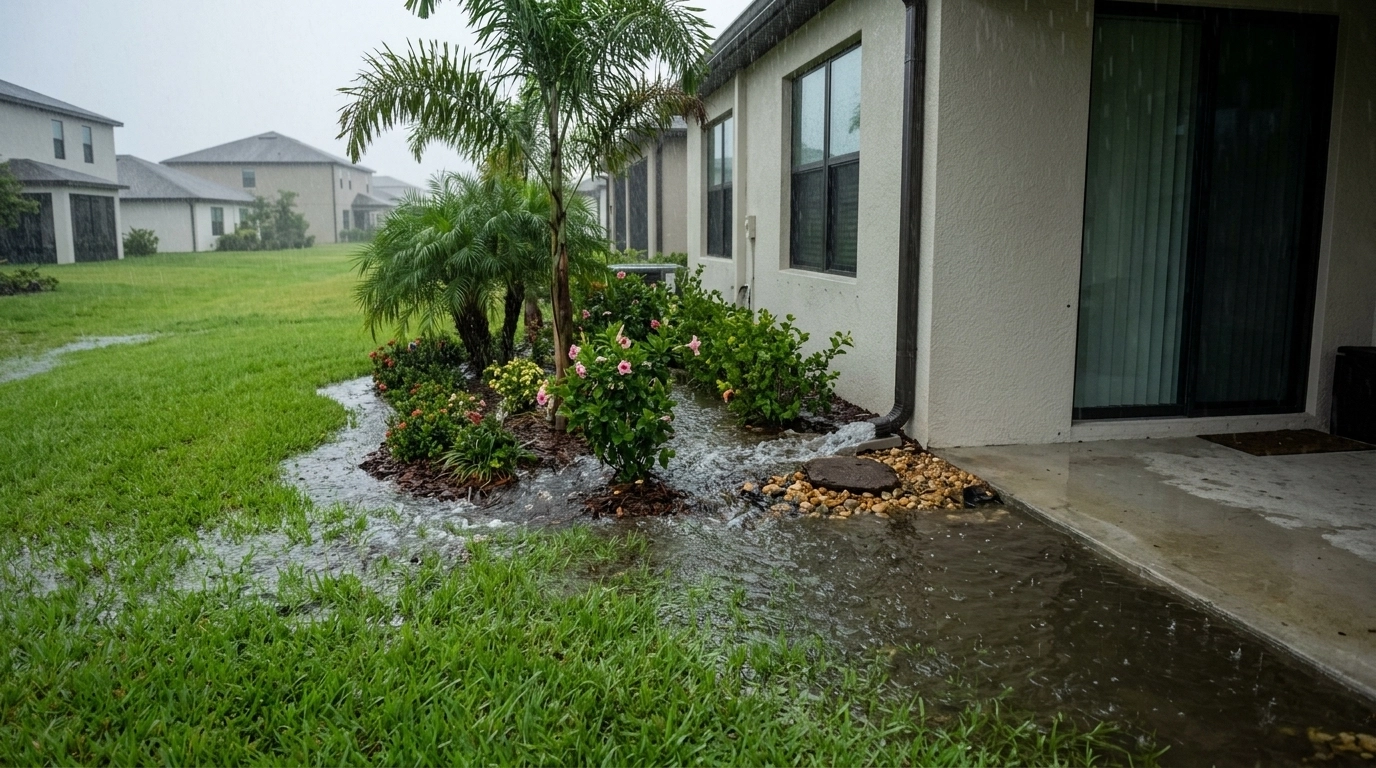
Living in Lakewood Ranch, Parrish, or anywhere around the Suncoast, we all know the drill. One minute you’re enjoying a quiet afternoon on the patio, and the next, the sky opens up with a tropical downpour that looks like a literal wall of water. While we love our lush, green landscapes, Florida’s intense rain presents a massive challenge for our yards.
If you’ve ever walked outside after a storm only to find a new “lake” forming next to your foundation or your expensive mulch floating down the street, you’ve got a drainage problem. At Genesis Sprinklers and Water Management, we see it all the time. Most of the time, it isn’t just “too much rain”: it’s a design flaw in the yard.
Here are the seven most common drainage mistakes we see homeowners making and exactly how you can fix them before the next storm rolls in.
1. The “Shorty” Downspout
This is arguably the most common mistake in Florida. Most standard gutter installations come with downspouts that stop just a few inches from the ground. In a heavy storm, thousands of gallons of water are dumped directly at the base of your home.
The Mistake: Dumping concentrated water right at your foundation, which can lead to settling, cracks, and mold in the crawlspace or slab.
The Fix: Extend your downspouts. You want that water at least 5 to 10 feet away from the house. If you don’t like the look of plastic pipes running across your lawn, consider a professional “pop-up” drainage system that stays underground until the water pressure pushes it up during a storm.
2. Using “Fill Dirt” as a Band-Aid
We’ve all seen it: a low spot in the yard collects water, so the homeowner buys ten bags of topsoil and dumps it in the hole.
The Mistake: Without changing the slope of the land, you’re just creating a new obstacle for water to navigate. Florida’s sandy soil erodes easily; without a proper plan, that new dirt will be halfway to the neighbor’s yard by next Tuesday.
The Fix: You need to address the “grade” or the slope. Water needs a clear, downhill path to a designated exit point (like a swale or the street). Sometimes, this means digging down in other areas rather than just filling up the low ones.
3. The “Silent Killer”: Clogged Gutters and Debris
You might think your drainage system starts at the ground, but it actually starts at your roof.
The Mistake: Neglecting your gutters. When gutters are full of oak leaves or pine needles, the water overflows the sides. Instead of being channeled away, it falls like a waterfall directly onto your landscaping, washing away soil and pooling against the house.
The Fix: Clean your gutters at least twice a year: more if you live in a heavily wooded part of Parrish or Lakewood Ranch. Also, check the bottom of the downspouts for “debris dams” that can back up the whole system.
4. Landscaping “Dams” (New Edging and Beds)
We all want curb appeal. However, that beautiful new stone edging or raised flower bed you just installed might be acting like a dam.
The Mistake: Placing landscaping features directly in the natural path of runoff. If you block the water’s exit, it will find somewhere else to go: usually back toward your house or into your garage.
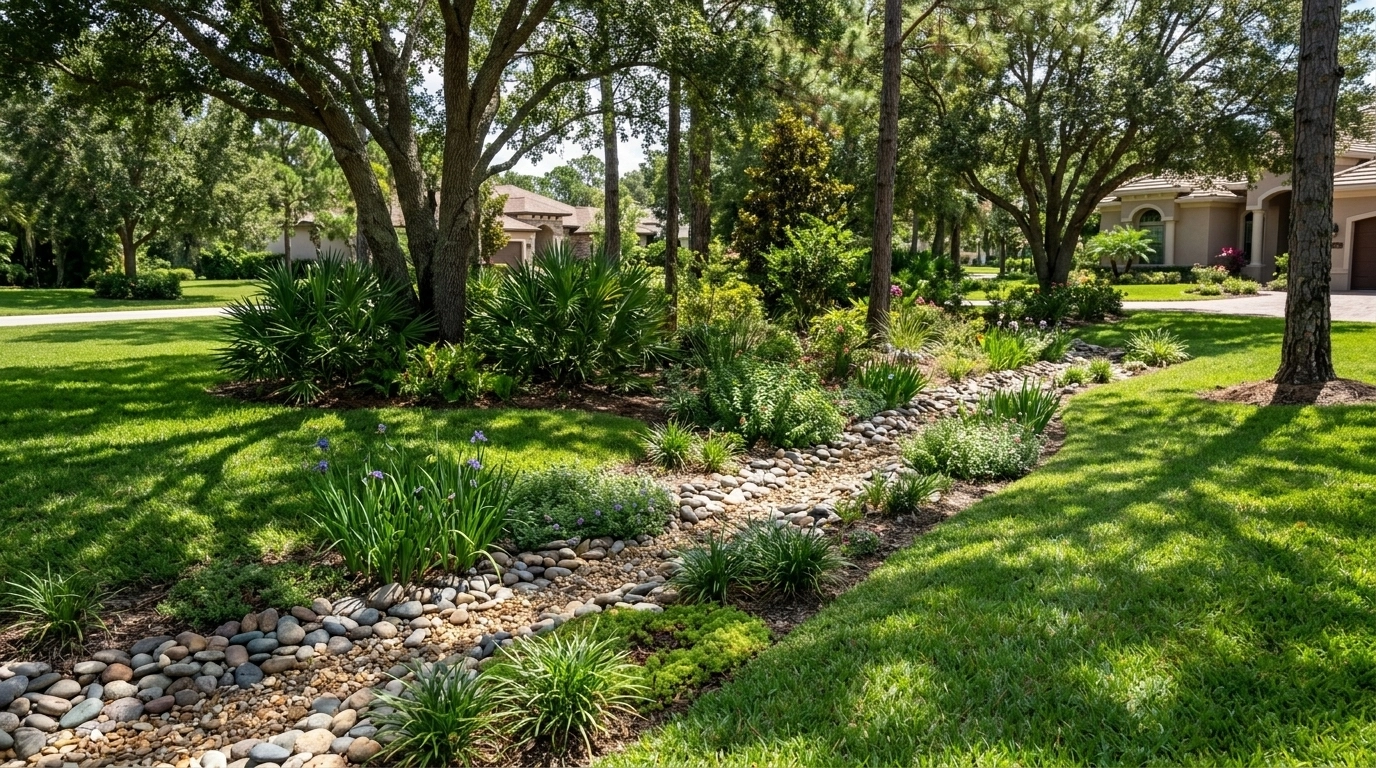
The Fix: When planning new landscape features, look at the natural “flow” of your yard during a rain. If you must put a bed in a drainage path, you might need to install a “dry creek bed” using river stones (like the one pictured below) to allow water to pass through while keeping the aesthetics high.
5. Neglecting the Neighborhood Swale
Most modern developments in Lakewood Ranch are engineered with “swales”: those shallow, grassy dips between houses or along the street.
The Mistake: Thinking the swale is just a “lumpy lawn” and trying to level it out or filling it with heavy landscaping. The swale is a critical piece of community infrastructure designed to move water away from your property.
The Fix: Keep your swale clear. Mow it regularly, but don’t scalp the grass. If you notice your swale isn’t draining after 48 hours, it might have been improperly graded or compacted, and it’s time to call in a professional for an assessment.
6. Ignoring Soil Compaction
In Florida, we often deal with “hardpan”: a layer of soil that becomes so compacted it acts like concrete.
The Mistake: Assuming the ground will eventually “soak it up.” If your soil is compacted, the water can’t penetrate. This leads to runoff that causes erosion or standing water that breeds mosquitoes.
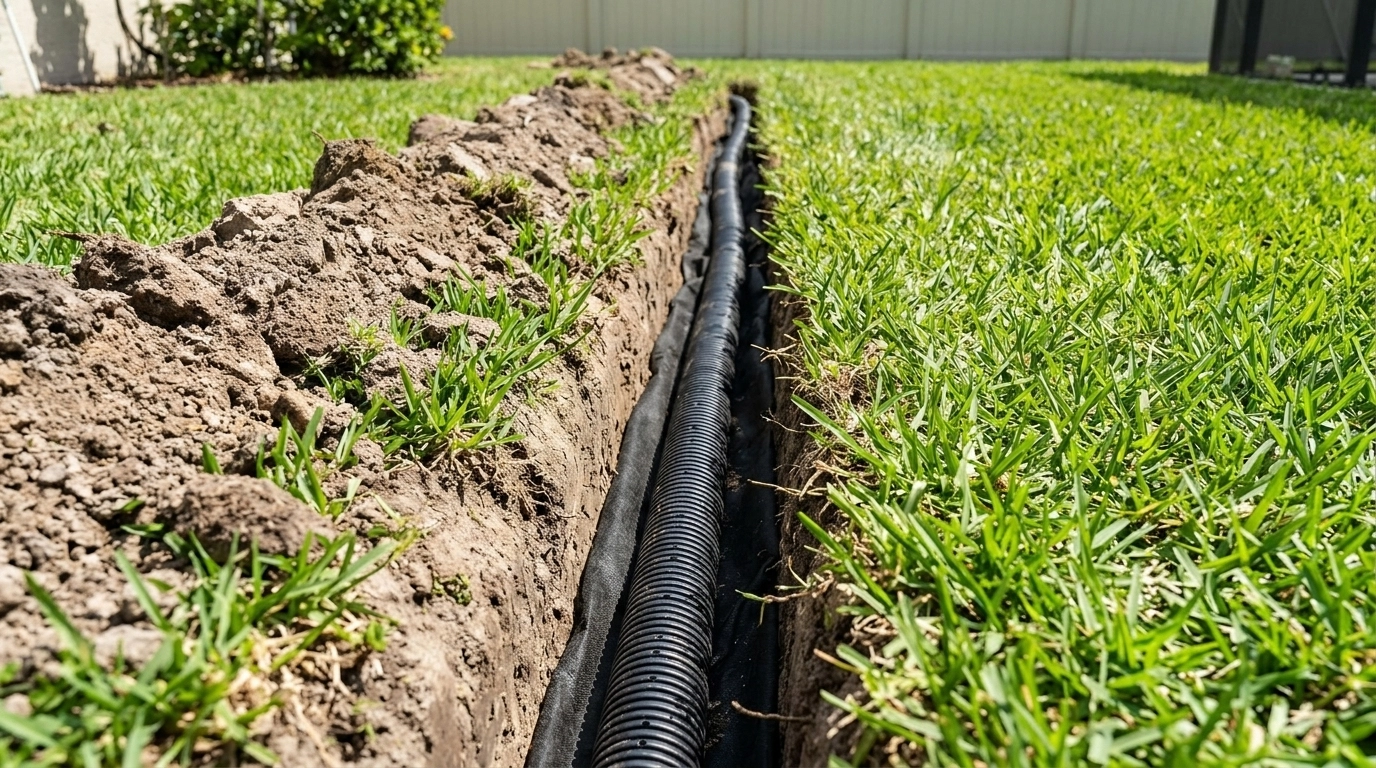
The Fix: Core aeration can help, but for serious drainage issues, you might need a French drain. This involves digging a trench, laying a perforated pipe, and surrounding it with gravel to create a permanent, easy path for water to travel into the subsoil or out to a drain.
7. Thinking Irrigation and Drainage are Unrelated
Many homeowners search for “lawn sprinkler repair near me” because they have dead grass or soggy spots, only to find out the problem isn’t their sprinklers: it’s their drainage.
The Mistake: Over-irrigating a yard that already has poor drainage. If your yard doesn’t drain well, you shouldn’t be watering it as often as a yard with sandy, fast-draining soil.
The Fix: Integrate your systems. Modern smart controllers, like the ones we install at Genesis Sprinklers and Water Management, use local weather data and soil moisture sensors to ensure you aren’t adding fuel to the fire. If you’re looking for “irrigation system repair near me,” make sure the company also understands how to manage the exit of that water, not just the entry.
When to DIY vs. When to Call Genesis
Cleaning your gutters or adding a plastic downspout extension is a great Saturday project. But when you start talking about moving hundreds of pounds of dirt, calculating “percent of slope,” or installing underground French drains, it’s easy to get in over your head.
Incorrect drainage work can actually make the problem worse, potentially pushing water into your neighbor’s yard (which can lead to legal headaches) or, worse, back into your own foundation.
Our team specializes in the unique landscape requirements of the Lakewood Ranch area. We don’t just “dig holes”: we design precision systems that protect your property and promote plant health. Whether you need a simple irrigation system repair or a full-scale drainage overhaul, we have the expertise to handle Florida’s unique water challenges.
Final Thoughts
Don’t wait for the next hurricane or tropical storm to find out where your yard’s weak spots are. Take a walk outside during the next afternoon shower. If you see water pooling where it shouldn’t, or if your gutters are overflowing like a fountain, it’s time to act.
A little bit of maintenance today can save you thousands of dollars in foundation repairs or landscape replacement tomorrow.
Ready to get your yard storm-ready? Contact Mike and the team at Genesis Sprinklers and Water Management today. We serve Lakewood Ranch, Anna Maria Island, Parrish, and Longboat Key. Let’s make sure the only water in your yard is the water your plants actually need!