

Summary
The Secret to Protecting Your Landscaping from Heavy Rain
Why Your Swales and Culverts Matter: The Secret to Protecting Your Landscaping from Heavy Rain
If you’ve lived in Lakewood Ranch or anywhere along the Florida Gulf Coast for more than a single summer, you know the drill. It’s 3:00 PM in July. The sky turns a bruised shade of purple, the air gets heavy, and within minutes, it’s coming down in sheets. We call it “liquid sunshine,” but when four inches of rain fall in less than an hour, it feels a lot more like a deluge.
For most homeowners, the focus is on whether the roof is holding up or if the kids left their bikes in the driveway. But while you’re watching the storm from the safety of your porch, there’s an invisible war being fought in your yard. The front lines aren’t just your grass or your flower beds; they’re your swales and culverts.
At Genesis Sprinklers and Water Management, we spend a lot of time thinking about how to get water onto your plants. But just as important: and often overlooked: is how we get the excess water off your property. Understanding how your neighborhood’s drainage system works is the secret to a long-lasting, healthy landscape.
The Unsung Hero: What Exactly is a Swale?
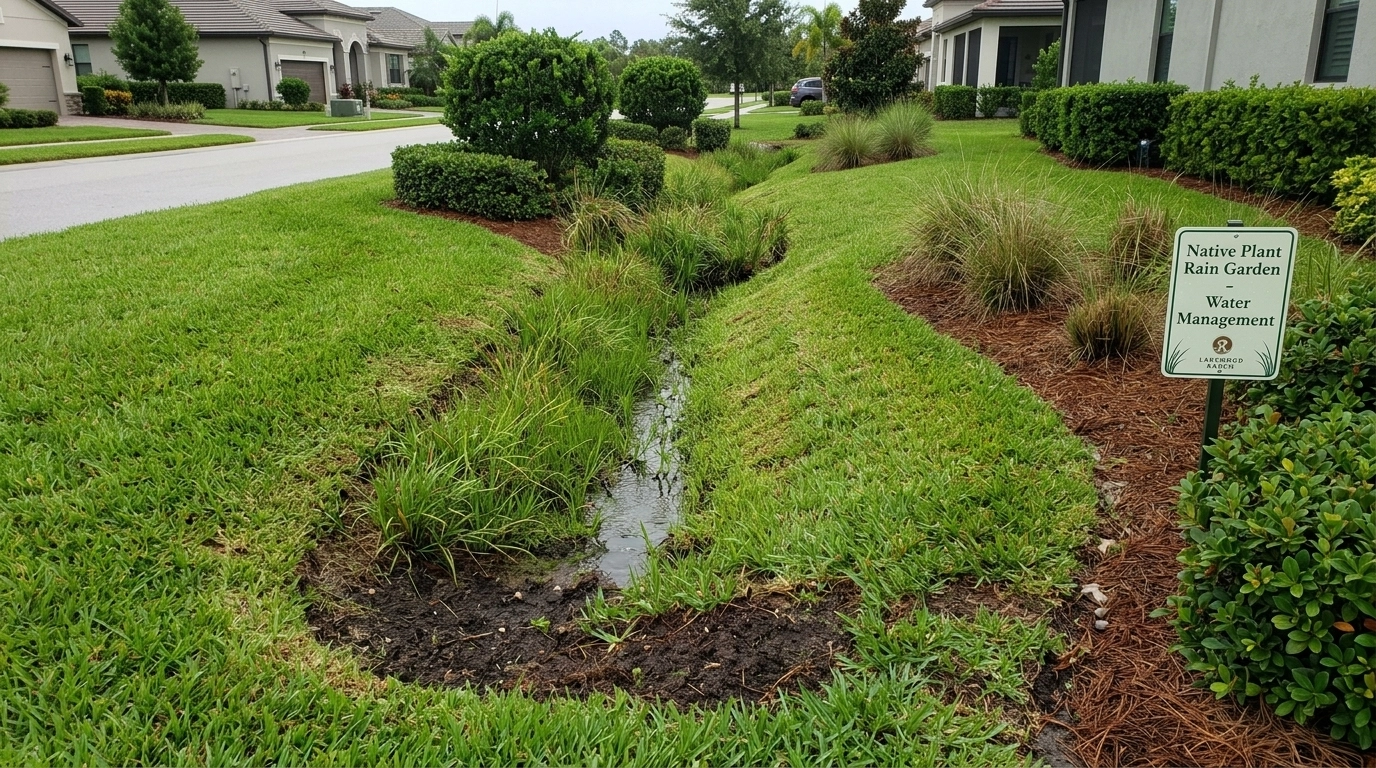
You’ve seen them a thousand times, but you might just think of them as “that annoying dip in the grass.” A swale is a shallow, grassy channel designed to manage water runoff. Unlike a concrete gutter, which just shoots water away as fast as possible, a swale is designed to do three things: slow it down, spread it out, and soak it in.
In our sandy Florida soil, swales are incredibly efficient. When the rain hits, the swale catches the runoff from your roof and your neighbors’ driveways. As the water moves slowly through the grass, the soil acts like a natural filter, trapping pollutants and sediment before the water eventually recharges the groundwater or moves into the larger storm system.
When we provide drainage solutions Florida homeowners can rely on, we often look at these swales first. If the “dip” isn’t deep enough, or if it’s been filled in with mulch or rogue landscaping, that water has nowhere to go. And water is like a persistent toddler: if you don’t give it a path, it’ll make its own.
Culverts: The Underground Arteries
While the swale handles the surface water, the culvert is what keeps the whole neighborhood from turning into a lake. A culvert is typically a large pipe located under your driveway or at the entrance to a property. Its job is simple: allow water to pass from one side of an obstruction (like your driveway) to the other without washing out the road.
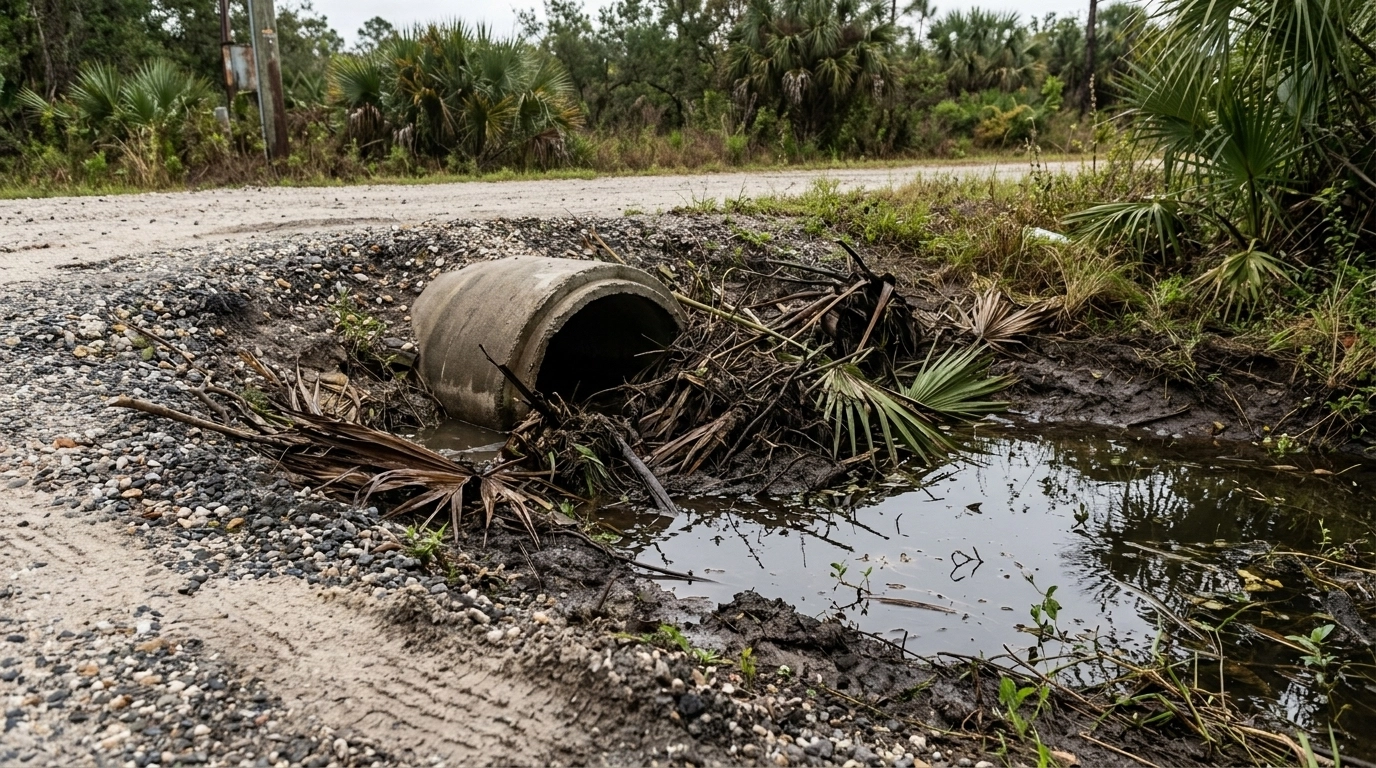
Think of the culvert as the “transit system” for neighborhood drainage. If your culvert is crushed, rusted through, or: most commonly: clogged with palm fronds and grass clippings, the water backs up. That backup doesn’t just affect your yard; it creates a domino effect that can flood your neighbor’s property and even undermine the foundation of your own driveway.
The “Butterfly Effect” of Neighborhood Drainage
One of the things we emphasize at Genesis is that no yard is an island. In communities like Lakewood Ranch, Parrish, and Longboat Key, drainage is a collective effort. Most neighborhoods are engineered with a specific “flow” in mind. Water is supposed to move from Property A, through a swale to Property B, under a culvert at Property C, and eventually into a retention pond or storm drain.
When one homeowner decides to “fix” that low spot in their yard by filling it with dirt or building a raised garden bed right in the middle of a swale, they’ve just built a dam. Suddenly, the water that was supposed to move through their yard is sitting in their neighbor’s garage.
This is why understanding neighborhood drainage patterns is so critical. Before you start a major landscaping project, it’s worth checking to see where the water is supposed to go. A professional eye can help you design a beautiful landscape that works with the drainage system, not against it.
When the System Fails: The Hidden Costs of Poor Drainage
It’s easy to ignore a swale or a culvert until you’re looking at a $10,000 repair bill. When drainage systems fail, the consequences are more than just a soggy lawn.
1. Soil Erosion
Water is a powerful force. If it isn’t directed through a stabilized swale or pipe, it will carve its own path. We’ve seen beautiful, expensive landscaping literally washed away because a culvert was blocked. Once the topsoil is gone, your plants lose their nutrient base and their stability.
2. Foundation Issues
This is the big one. If water pools against your home’s foundation because the yard isn’t grading toward the swale properly, it can lead to cracks, settling, and moisture intrusion inside the home. In Florida, where “slab-on-grade” is common, keeping the area around your foundation dry is non-negotiable.
3. Mosquito Breeding Grounds
We already have enough mosquitoes in Florida. A poorly maintained drainage system creates pockets of standing water that are essentially five-star hotels for mosquito larvae. A functional swale should be dry within 24 to 48 hours after a rainstorm. If yours is still holding water three days later, something is wrong.
4. Root Rot
Your expensive palms and ornamentals need water, but they don’t want to go swimming. Extended periods of standing water “drown” the roots, leading to fungal issues and root rot that can kill even the heartiest plants.
Maintenance 101: Keeping the Water Moving
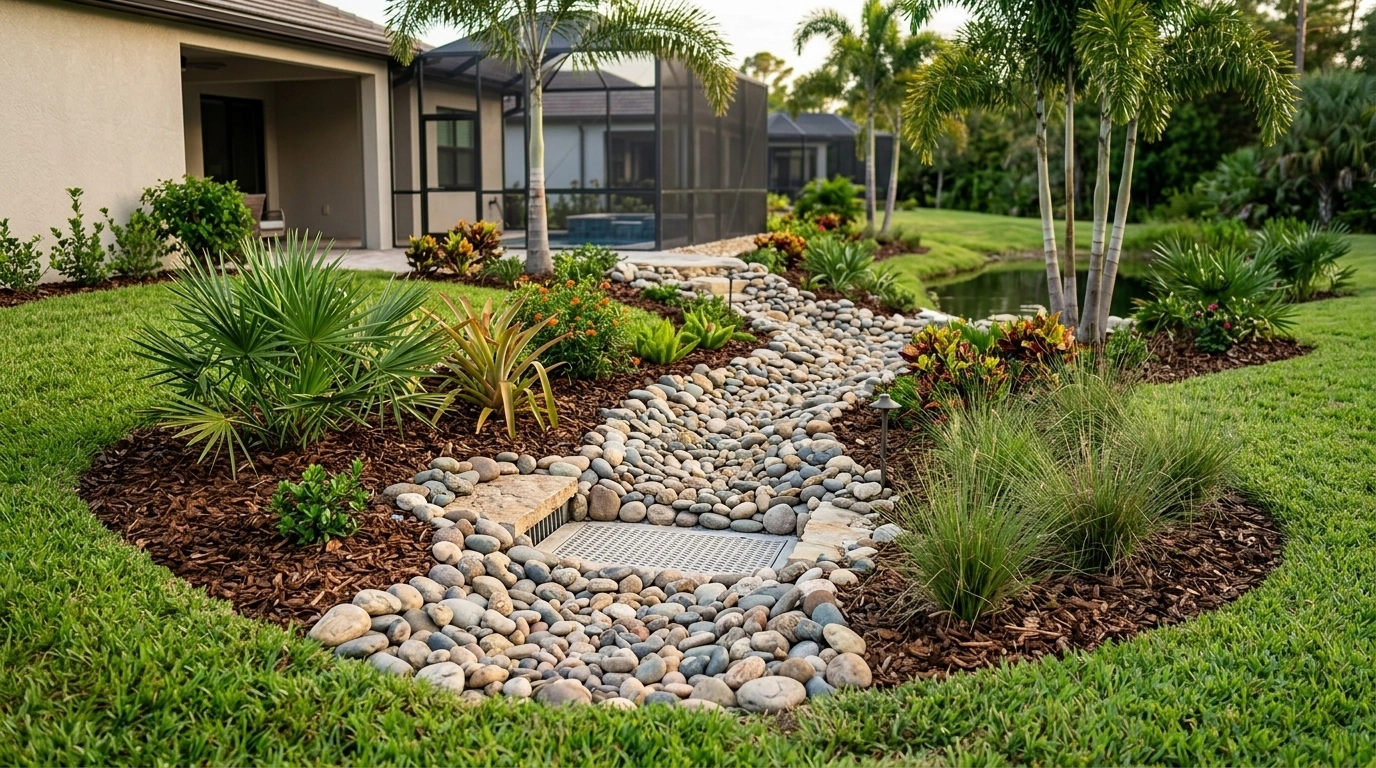
The good news is that most drainage issues are preventable with a little bit of routine maintenance. Here’s a quick checklist to keep your property high and dry:
- Don’t “Fill the Dip”: It might be tempting to level out your yard for a flatter lawn, but that swale is there for a reason. Keep the original grade.
- Clear the Debris: After a storm, check your culvert openings. Remove any branches, palm fronds, or trash that might have washed in.
- Watch the Grass Clippings: Never blow your grass clippings into the swale or down a storm drain. They eventually settle, turn into muck, and clog the system.
- Mow Your Swale: Keep the grass in your swale at a reasonable height. Overgrown grass and weeds can slow down the water too much, causing it to pool and overflow.
- Check for “Silting”: Over time, dirt and sediment can build up in the bottom of a swale, effectively raising its height. Every few years, you may need to have the swale professionally “scraped” or regraded to its original depth.
Why Professional Drainage Solutions Matter
While clearing a few leaves out of a pipe is a great Saturday DIY project, some drainage problems require a deeper level of expertise. Issues like shifting soil, collapsed pipes, or significant grading errors need the touch of professional irrigation services Lakewood Ranch experts.
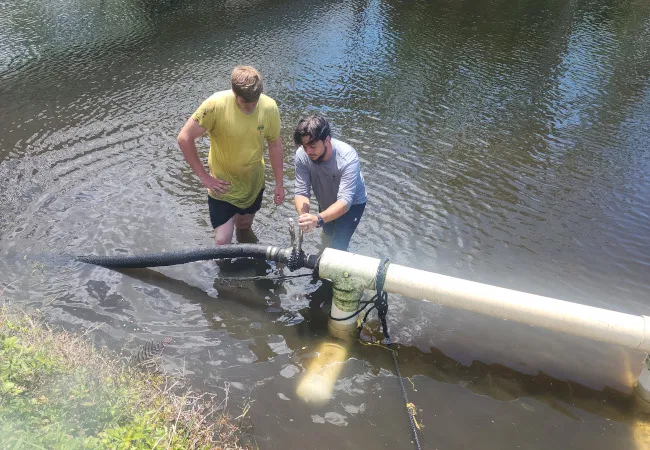
At Genesis Sprinklers and Water Management, we look at the big picture. We don’t just fix a leak; we look at how the water interacts with your entire property. Whether it’s integrating smart sensors that know when the ground is too saturated to water, or repairing a lake intake line that’s been compromised, our goal is sustainable, efficient water management.
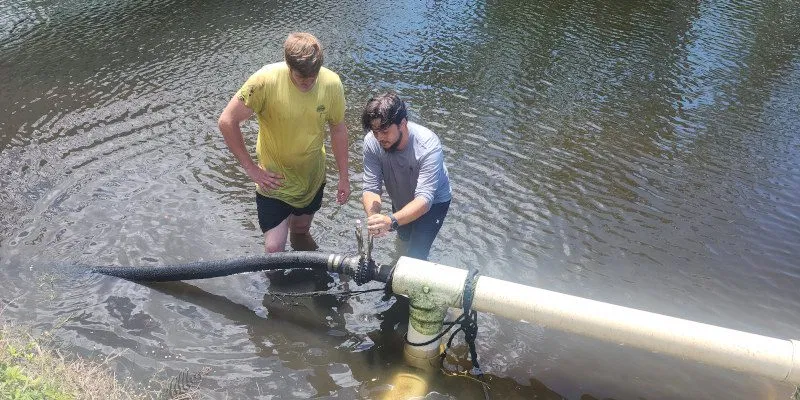
Our team is trained to spot the subtle signs of drainage failure before they become disasters. We understand the regional landscape requirements of the Lakewood Ranch area: from the specific types of soil to the local regulations regarding runoff.
Final Thoughts: Don’t Wait for the Next Storm
In Florida, “rainy season” isn’t just a time of year; it’s a way of life. Your swales and culverts are the silent protectors of your home and your hard-earned landscaping. By giving them a little bit of attention now, you can enjoy those afternoon thunderstorms from your porch without worrying about what’s happening to your yard.
If you’ve noticed standing water that won’t go away, or if you’re planning a new landscaping project and want to make sure your drainage is up to par, give us a call. We specialize in the design, installation, and repair of professional systems that keep your property looking great and staying dry.
Let’s make sure your “liquid sunshine” stays where it belongs: in the ground, and not in your house.
Ready to protect your property? Contact Genesis Sprinklers and Water Management, LLC today for a consultation on your drainage solutions Florida needs. Whether you’re in Lakewood Ranch, Parrish, or the islands, we’ve got you covered.