


The short answer
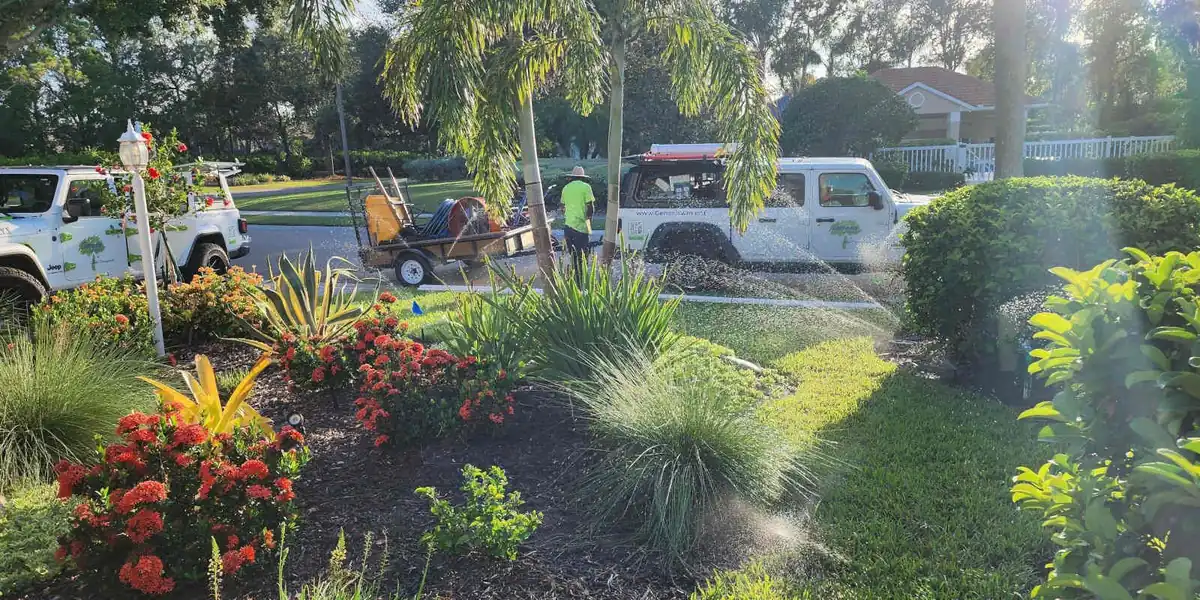
UF/IFAS Extension advises ½ to ¾ inch of water per application for established St. Augustine grass, applied when the blades start to fold, wilt or turn blue-gray, with the amount kept the same all year and only the frequency changed by season. To set your sprinkler system to deliver it, time how long each zone takes to fill a few straight-sided cans to ½ or ¾ inch and use that run time. Watering days and hours are set by SWFWMD and your county and change during droughts, so check the rule in effect today at WaterMatters.org/Restrictions.
Call (833) 543‑6374 or request a sprinkler quote online.
In the sun-drenched paradise of Southwest Florida, where vibrant landscapes are a testament to nature’s resilience, St. Augustine grass stands as a testament to lush, green beauty. This resilient grass variety, known for its tolerance to heat and humidity, thrives in this tropical haven. As an expert in the field, I’m excited to guide you through the art and science of proper watering for St. Augustine grass – from installation to maintenance – ensuring your lawn flourishes in its full splendor.
- Installation: Setting the Foundation
When embarking on the journey of installing St. Augustine grass, remember that the initial stages set the groundwork for long-term success. Begin by preparing the soil adequately. Clear the area of debris and ensure the soil is loose and well-draining. This aids in root establishment and allows for better water penetration.
Once the turf is laid, the crucial first step is watering. During the first week post-installation, prioritize frequent watering sessions. Aim to keep the soil moist, but not saturated, promoting root growth. Water the new sod every day for the first week, ensuring that the soil underneath remains consistently moist. As the roots start to establish themselves, gradually taper off watering to encourage deeper root growth.
- Establishing a Routine: Watering Schedule
After the initial establishment period, crafting a watering schedule is key to maintaining a healthy St. Augustine lawn. Southwest Florida’s climate, characterized by hot summers and occasional droughts, demands thoughtful water management.
During periods of active growth, typically in the warmer months, aim for a watering routine of around 1 inch of water per week. However, adjust this guideline based on weather conditions. Monitor rainfall and supplement with irrigation as needed to maintain consistent moisture levels. Remember, deep, infrequent watering encourages robust root growth, so consider using tools like rain gauges or moisture meters to gauge the need for additional watering.
- Timing Is Crucial: Best Time to Water
Timing your watering sessions can significantly impact the effectiveness of water uptake by your St. Augustine grass. Optimal timing helps minimize water loss due to evaporation and ensures the grass can absorb the moisture efficiently.
The ideal time for watering is early morning, preferably between 4 am and 10 am. This allows the grass blades to dry out during the day, reducing the risk of fungal diseases. Avoid watering in the late evening, as prolonged moisture on the grass overnight can create a breeding ground for diseases.
- Techniques for Effective Watering
Employing the right watering techniques plays a vital role in maximizing water absorption and minimizing waste. Instead of frequent light watering, encourage deeper root growth by applying water slowly and deeply.
Consider using sprinklers or irrigation systems that provide even coverage across the lawn. Ensure that the water penetrates the soil to a depth of at least 6 inches, encouraging the roots to grow deeper in search of moisture. Avoid runoff by dividing the watering into shorter cycles with breaks in between, allowing the water to infiltrate the soil effectively.
- Monitoring and Adjusting: Fine-Tuning Your Approach
Regular monitoring and adjustments are crucial in maintaining an optimal watering regimen for your St. Augustine grass. Keep an eye out for signs of over or under-watering, such as wilting, discoloration, or excessive thatch buildup.
Take into account seasonal changes and adapt your watering schedule accordingly. During cooler months or rainy seasons, reduce watering frequency to prevent waterlogging, while in hotter and drier periods, increase watering to compensate for higher evaporation rates.
In conclusion, mastering the art of watering St. Augustine grass in Southwest Florida is a blend of science, observation, and proactive management. By following these guidelines – from installation practices that establish a strong foundation to a well-crafted watering routine – you can ensure your lawn flourishes, offering a lush, green oasis in the heart of the Sunshine State. Embrace these practices, and let your landscape bloom with the vibrant allure of St. Augustine grass!
Frequently asked question
How much water does St. Augustine grass need?
UF/IFAS Extension’s publication St. Augustinegrass for Florida Lawns (ENH5) advises applying ½ to ¾ inch of water per application, which wets roughly the top 8 inches of soil, where most of the roots are. It says to water when the leaf blades begin to fold up, wilt or turn a blue-gray color, or when footprints stay visible on the grass, and to keep that amount the same all year, changing only how often you water, with less needed in the fall and winter.
Set your sprinkler system to deliver that amount. Place a few straight-sided cans, such as tuna cans, in each zone, run the zone, and time how long it takes to fill them to ½ or ¾ inch: that is the zone’s run time. If water runs off before it soaks in, split the run into shorter cycles with cycle and soak.
How often, and on which days and hours, you may water is set by the Southwest Florida Water Management District and your county, and it changes during droughts. Check the rule in effect today at WaterMatters.org/Restrictions, mymanatee.org/waterrestrictions or Sarasota County’s water restrictions page. A Genesis Tune Up programs the controller for the season and the watering restrictions in effect, with cycle and soak.
